Can a Dentist Fix Snoring? Oral Appliance Therapy Explained
Few people think of a dental clinic when they think about snoring — yet for habitual snorers and many people with mild to moderate obstructive sleep apnea (OSA), a small custom-made mouthpiece worn at night is one of the most effective and best-tolerated treatments available. Here's how it works and who it helps.
Why you snore
During deep sleep, the muscles of the tongue and throat relax. In some people the tongue and soft palate fall back far enough to narrow the airway — the tissues vibrate as air squeezes past (snoring), and in sleep apnea the airway closes completely for seconds at a time, repeatedly, all night. The result is unrefreshing sleep, morning headaches, daytime drowsiness — and over years, raised risks of blood pressure problems and heart disease. A partner's report of "he stops breathing, then gasps" is a classic sign worth taking seriously.
What an oral appliance does
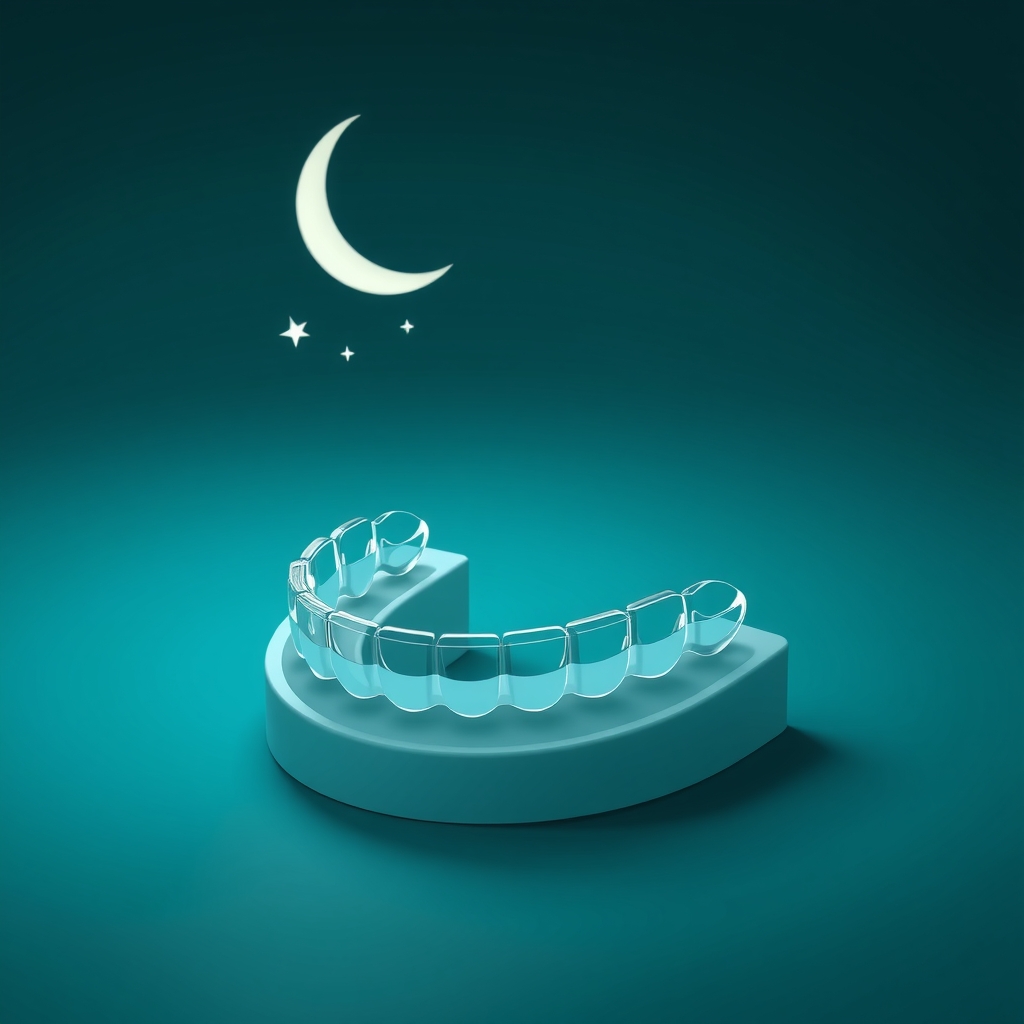
A mandibular advancement device (MAD) looks like a slim double sports guard. Custom-made from impressions of your teeth, it holds your lower jaw slightly forward during sleep — and because the tongue is attached to the lower jaw, this pulls the tongue base forward and keeps the airway open. No masks, no hoses, no electricity; it travels in a pocket-sized case.
Oral appliance vs CPAP
| Oral appliance | CPAP machine | |
|---|---|---|
| Best for | Snoring, mild–moderate OSA | Moderate–severe OSA |
| Comfort | High — most users adapt in days | Many struggle with the mask long-term |
| Travel | Pocket-sized | Machine + power needed |
| Noise | Silent | Low hum |
CPAP remains the gold standard for severe apnea. But CPAP only works when it's actually used, and studies consistently show many patients abandon it — a well-fitted oral appliance that gets worn every night beats a CPAP machine sitting in a cupboard.
What treatment involves
- Screening. Your symptoms, sleep history and airway are assessed. Where apnea is suspected, a sleep study (often doable at home) grades its severity — this decides whether an appliance alone is appropriate or a physician referral is needed.
- Fitting. Impressions or a digital scan of your teeth; the custom appliance is fitted a couple of weeks later and adjusted for comfort.
- Titration. Over following weeks the forward position is adjusted in small steps until snoring resolves with the least jaw advancement.
- Review. Periodic checks on the appliance, your bite, and symptom control.
Have questions about your teeth?
Smiles By Dr. T · Plot No 35, Sector 45, Near ISKCON Temple, Gurgaon
Frequently asked questions
Is an oral appliance uncomfortable to sleep with?
There's an adjustment period of a few nights — mild jaw or tooth awareness on waking is common at first and settles. Custom-made appliances are far more comfortable than boil-and-bite devices from the market, which is also why they work better.
Do over-the-counter anti-snoring devices work?
Rarely for long. One-size boil-and-bite guards fit poorly, hold the jaw imprecisely, and often get spat out during sleep. A custom appliance fitted and titrated by a dentist is a different category of treatment.
How do I know if I have sleep apnea and not just snoring?
Snoring plus any of: witnessed breathing pauses, gasping awake, unrefreshing sleep, daytime sleepiness, or morning headaches suggests apnea. A sleep study gives a definitive answer and grades severity — important, because severe apnea needs CPAP, not an appliance alone.
Will the appliance change my bite?
Minor, usually temporary bite changes on waking are common and settle within an hour. Long-term bite changes can occur with years of use, which is one reason periodic dental reviews are part of proper appliance therapy.
Treatment costs mentioned on this page are indicative ranges for the Sector 45, Gurgaon region. Your exact cost depends on your case and will be confirmed after a clinical examination at the clinic.